
A Customer Came to Inspect the Goods — We Took Him Out for Noodles
A Nigerian customer came to inspect machines, and we ate noodles at the little shop by our warehouse. What came out over that bowl beat anything said across a negotiating table.
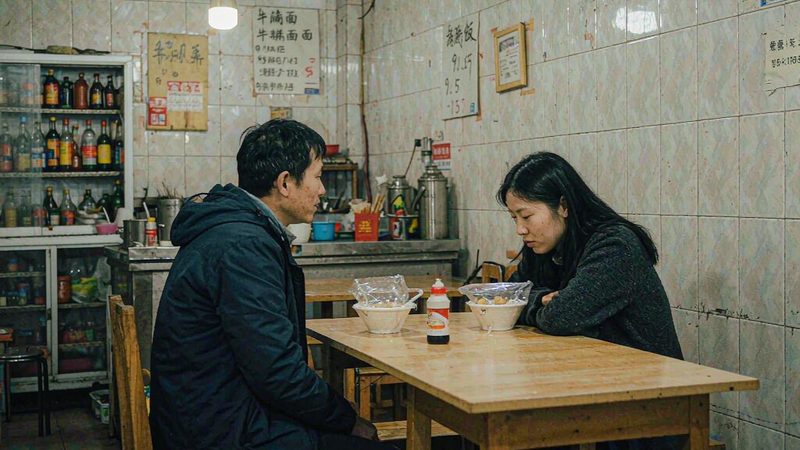
In May 2024, a Nigerian customer came to inspect goods.
His name was Chidi, a construction contractor, buying machines from us for the first time.
Inspection day
Chidi arrived at ten in the morning with two people: his operator and an interpreter.
We had three machines ready for him, all twenty-ton class.
The operator was a pro. He crawled under the machines for half an hour and came out covered in dust.
He talked to Chidi at length. The interpreter relayed it: the first machine's track rollers need replacing.
I said yes — it's in the report, page nine.
The second machine, he said, has slight hydraulic seepage.
I said it's in there — fourth section of the control valve, page eleven of the report.
The third machine, he said, is good.
I said it is.
The operator asked one more thing: why does your report say everything?
When the interpreter finished, I laughed. I said, if we didn't say it, you'd see it anyway.
Where to eat lunch
Past twelve, the inspection was done. I asked Chidi what he wanted for lunch.
He said anything, you decide.
Near our company, restaurants suitable for foreign guests are few. By custom we'd go to a Cantonese restaurant, about 150 yuan a head.
That day I changed my mind.
I said, there's a noodle shop by our warehouse. It's a dump, but the food is good. Want to try it?
Chidi said, sure.
The noodle shop
The shop sits at the edge of an urban village in Panyu — twenty-odd square meters, six tables.
Plastic stools, an electric fan, a handwritten menu taped to the wall.
The owner is a local in his fifties. Twenty-two years in business.
Five of us ordered a few bowls of beef brisket noodles, a few wonton noodles, two plates of greens, and a platter of braised meats.
Total: 147 yuan.
What we talked about over noodles
Chidi took a bite and said it was good.
Then he asked me a question: how much do you make on one machine?
In a formal setting I wouldn't answer. That day I did.
I said, we bought this machine for 480,000 yuan and we're selling it to you for 560,000 — an 80,000 gross spread. Out of that come inspection costs, yard costs, parts inventory carrying costs, financing costs, and the risk we carry. Net, we make about 12,000.
Chidi paused. Only 12,000?
I said, 12,000.
He said, I thought you made over a hundred thousand.
I said, that was ten years ago. Information is transparent now; nobody makes that anymore.
He went quiet for a moment, then said something I've remembered ever since.
He said: I'd rather know you make 12,000 than not know what you make at all.
What else he asked
He asked why we don't fix the machines up before selling.
I said, if we fix them you don't know what they were. We show you the machine as-is; you decide whether to repair it and where.
Some peers refurbish — repaint, swap parts, polish — so it looks new. I don't do that, because refurbishment hides information.
He asked, so do you repair anything?
I said, we fix what must be fixed and leave what shouldn't be. Anything tied to safety must be fixed — brakes, steering, cracks in structural members. Cosmetics and wear-related decline we don't touch; we just tell you straight.
He asked why.
I said, because repairs are cheaper where you are than here. And done locally, you know exactly what was fixed.
After the noodles
When we finished, Chidi said: I'll take all three machines.
I said, the first one needs new track rollers — you're sure?
He said, replace them. Give me the part numbers; I'll carry the parts home myself.
That afternoon we signed the contract. Three machines, 1.68 million yuan.
He left after signing and flew home the next day.
Afterward
The three machines reached Lagos and he replaced the rollers himself.
He sent me a video when it was done — replaced, he said.
In September 2024 he bought two more.
In March 2025 he referred two customers to us.
At the end of last year he came to Guangzhou, and we went back to the noodle shop.
The owner remembered him. This big fellow, he said, eats two bowls.
Chidi laughed. Two bowls, he said.
What I want to say
Our company's hospitality standard changed after that.
Not to save money — I realized that what a customer remembers about a meal in China isn't the dishes. It's what we said.
In a restaurant, everyone sits up straight and talks in pleasantries. In a noodle shop, once you're on a plastic stool, anything can be said.
Now the rule is: on a customer's first visit, ask what they'd like to eat. If they say anything, we take them to the little place by the warehouse.
Under fifty yuan a head.
Some customers aren't comfortable with that; then we go somewhere more formal. No forcing it.
But in my heart, that bowl of noodles does more than any banquet hall.
One last note
The noodle shop is still there. The owner's surname is Liang; beef brisket noodles are twenty-two yuan a bowl.
Next time a customer visits, I'm taking them again.