
The First Month After the COVID Policy Shift: The Orders Came Back
87 inquiries in the first eleven days of January — double the whole of last December. Five of nine backlogged orders shipped before the Spring Festival, and Mohammed booked a February 6th flight to come see the machines.
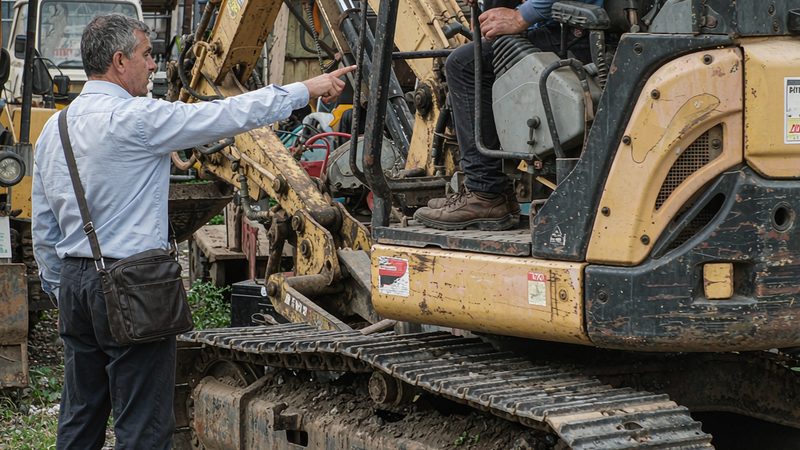
January 11th, ten days to the Spring Festival. Before clocking out I glanced at the inquiry dashboard: first eleven days of January, 87 inquiries.
For the whole of last December, 41. Before that, under 50 a month on average. The orders are back. I've held this sentence in for a month; today I dare write it.
How Much Inquiries Grew
Of the 87 inquiries, 53 were for construction machinery, 21 for solar, and the rest asked about clothing and farm equipment.
WhatsApp made it even clearer. Since New Year's Day I wake up to a dozen-plus unread messages every morning. Old customers from Tanzania and Kenya are back asking for prices, plus six new customers: three from Zambia, two from Ghana, one from Egypt.
The Zambian customer's first line was: "I've been watching your inspection videos for eight months. Can you ship now?" I read it twice. Three years of grinding it out online built up more than just old customers.
This time last year I could clear every message in a day with time to spare. This week it takes three of us in shifts. Xiao Wang got pulled over from documentation to help, and the first two days he was answering until 11 p.m.
Clear the Backlog First
Before new orders come old debts. Nine orders piled up at the end of last year, all from customers who'd paid deposits and got stuck on shipping schedules and quarantine paperwork.
Entry quarantine was scrapped starting January 8th, and sailings got denser too. Nansha to Mombasa no longer takes booking two weeks ahead, and a 40-foot container fell from last year's peak of USD 2,600 back to 1,500.
Of the nine backlogged orders, five shipped before the Spring Festival; the other four are lined up for early February. On loading days Lao Wang's crew worked 7 a.m. to 9 p.m., nine machines a day. The night of January 16th they loaded eleven — a single-day record since I joined the company. Lao Wang was so tired he fell asleep sitting on a tire.
Customers Can Come Again
On January 9th, Mohammed sent a screenshot of a flight ticket: February 6th, Dar es Salaam to Guangzhou. His first chance in three years to come see the goods.
He told me on the phone he wants to pick his road rollers in the yard himself and drive them one by one. Fine — whatever unit doesn't satisfy him, we swap.
Once you can meet face to face, business changes. Three years of online inspection saved us, but in the equipment trade a customer's heart only settles when his hand touches the mast.
The itinerary is drafted: airport pickup February 6th, Panyu warehouse on the 7th, test runs at the Nansha inspection yard on the 8th, and our Dongguan sorting warehouse on the 9th for his clothing order. My wife has already started the menu for four days of meals.
Machine Prices and Freight Are Both Moving
Once demand returned, domestic purchase prices moved first. In the first half of January, the buy price for a three-year-old CAT 320D rose RMB 20,000 over December. Dealers smell everything.
Freight is going down, machine prices are going up — one out, one in, margins a little thicker. But I don't dare stockpile. Where to cap inventory, we decide after the month-end meeting.
The Sobering Part, Too
Not every market is back. Nigeria's exchange rate is still a mess, and Chidi asked about just one small forklift in January. No movement from South America yet.
On the orders that did come back, I actually raised the deposit ratio. Two years of pent-up demand bursting loose at once means real demand mixed with bandwagon buyers. Deposits went from 30% to 40%. Not because I don't trust customers — vessel space and machine supply are both tight this round, and I won't carry inventory for people just watching.
Before the Spring Festival I went through the inventory list — 47 machines — and sent it to every old customer. Anyone who wants to come see the goods, February or March both work. The warehouse feeds you.