
Our Grading Standard for Used Clothing Runs Twelve Pages
Twelve pages, over three hundred example photos, seven revisions. This standard is the most valuable thing in our used clothing business — and the hardest to write.
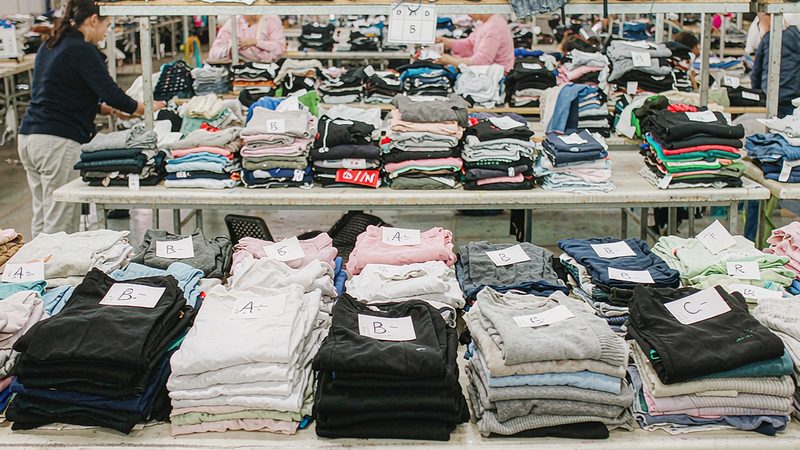
In used clothing export, the hardest part isn't sourcing — it's grading.
The same garment can get three different grades from three different people. Until that contradiction is solved, the business can't scale.
So we wrote a standard. First version in 2019; we're now on version seven. Twelve pages.
How crude the first version was
The 2019 first version was two pages.
Grade A: like new. Grade B: 90 percent new. Grade C: 70 percent new. Grade D: wearable. Grade E: scrap.
That was it.
The problem: everyone reads 90 percent new differently. The same sorter graded differently in the morning and the afternoon.
After the first shipment went out, the customer complained that Grade B contained garments with obvious stains.
We reviewed, and found that 11 percent of the Grade B items in that shipment would be Grade C or D under today's standard.
How we fixed it
We did one thing: replaced every adjective with observable features.
Don't write light signs of use. Write: pilling on the fabric surface, no larger than a palm, no damage, no stains.
Don't write obvious stain. Write: stain over two centimeters across, or located in conspicuous spots like the chest or collar.
Every criterion must be describable in measurable terms.
That rewrite took a month.
What's in the twelve pages
Here's the table of contents:
Page one, scope and the master grading table.
Pages two and three, general rules: odor, mildew, insect damage, fading, damage, repairs.
Page four, down jackets and padded coats: down content, down leakage, quilted-clump checks.
Page five, denim: wash level, holes, abrasion whitening, zippers and rivets.
Page six, knits and sweaters: pilling grade, deformation, moth damage.
Page seven, shirts and T-shirts: collar and cuff wear, print cracking, yellow-stain checks.
Page eight, jackets and coats: lining, buttons, shoulder deformation.
Page nine, shoes: sole wear, sole separation, upper damage, odor.
Page ten, bags and accessories: hardware, zippers, leather cracking, lining.
Page eleven, children's wear (stricter, because children are involved).
Page twelve, dispute-handling process and responsibility.
Where the three hundred photos came from
Every criterion comes with photos.
We shot them ourselves, pulling typical cases from years of sorted goods.
Each criterion gets at least three: a passing sample, a borderline sample, a failing sample.
The borderline sample matters most — it's the one easiest to misjudge.
For stain over two centimeters, we include one at exactly two centimeters, one at 1.8, one at 2.3.
With those side by side, the sorter sees where the line is.
Training and testing
New hires train for three days.
Day one, the standard — clause by clause, with photos.
Day two, shadowing — watch veterans sort, hands off.
Day three, hands-on — sort one hundred pieces, reviewed by the team lead.
Day four, the test: fifty standard samples, 95 percent accuracy required.
Fail, and you train two more days and retest. Fail twice, and you don't work in grading.
The test is not a formality. Last year six people failed the first round; two failed the second and were transferred.
How disputes are handled
When graders disagree, the team lead rules.
If the team lead isn't sure, it goes to a three-person grading panel for a vote.
Principles for three situations:
Borderline cases get graded down, never up. Better to understate than overstate.
Cases the standard doesn't cover are logged on the spot, and the standard is updated within a week.
When customer feedback disagrees with our grading, the customer's feedback governs; we trace the cause and revise the standard.
Error rate
We track the re-inspection error rate monthly.
2019: 9.2 percent.
2020: 5.4 percent.
2021: 2.7 percent.
2022: 1.1 percent.
This year so far: 0.8 percent.
Our target is under 0.3 percent. Not there yet.
What is this standard worth
People have asked whether we'd sell the standard.
I say no — but customers are welcome to read it.
Showing customers has two benefits:
One, they know how we grade, so there's a basis when they inspect and disputes are rare.
Two, when they see how fine-grained the standard is, they know how serious our work is.
It's our competitiveness, not a secret.
The truly hard part isn't writing the standard — it's executing it. Anyone can write a standard. Enforcing it strictly, three hundred days a year, is hard.
Still being revised
Version seven came out this February, with two changes.
One covers yellow stains on light-colored down jackets — we separated oxidation stains (allowed in Grade B) from sweat stains (Grade C only).
The other covers zipper replacement: a zipper replaced with a YKK no longer triggers a downgrade.
Version eight is in the works, mostly tightening the children's wear section.
This standard will never be finished. The goods keep changing; customer requirements keep changing.
But as long as it's still being revised, we're still taking it seriously.