
At the Trade Fair We Printed No Flyers — Just Three Things
At the Canton Fair we printed not a single flyer. We brought a monitor, a box of parts samples, and a phone. Three days, sixty-one business cards.
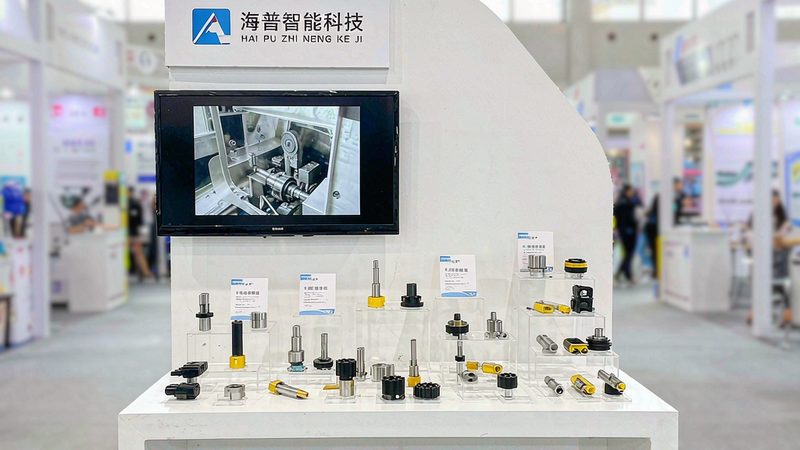
June 26 to 28, the Canton Fair. We exhibited.
This time we printed no flyers. Not one.
That saved 4,800 yuan in printing. We brought only three things.
The three things
One: a 43-inch monitor looping inspection videos.
Two: a box of parts samples — twenty-five pieces, all common wearing parts.
Three: a phone, for adding customers on WeChat and demonstrating our parts-ordering flow live.
That's all. A nine-square-meter booth, one table, four chairs.
Why no flyers
I've seen too many flyers meet their end.
A customer takes a stack, stuffs them in a bag, and back at the hotel, while sorting business cards, throws every flyer away.
Why throw them away? Because everything on a flyer, he can get word-for-word from any other booth. Excellent quality, service first, exporting to thirty countries — everyone writes that.
Writing it equals writing nothing.
We ran the numbers: two thousand flyers cost 4,800 yuan. Distributed, they turned into eleven inquiries last year — an acquisition cost of 436 yuan per inquiry.
Of those eleven, two closed.
What played on the monitor
Three clips on loop.
First, two minutes: the inspection of one excavator. From cold start to function test, single take.
Second, one minute: a photo set of problems. Photos from machines we sold in the past year that had issues. Repair welds, seepage, wear — all of it.
Third, forty seconds: real footage of the parts warehouse. Shelves, part-number labels, packing.
Not one of the three says how great we are.
How customers reacted to the problem photos
On day one, a customer stopped at the second clip and watched for a long time.
He asked me, why do you show the bad parts.
I said, I show them whether you ask or not. Seeing these, you know we dare to shoot our other machines the same way.
He left his card on the spot and said he wanted two machines.
Two more customers asked the same question on day two.
Over three days, seven people asked that question unprompted. Five of the seven left contact details; two stated intent on the spot.
How the parts samples were used
Every one of the twenty-five samples has a story.
A hydraulic hose fitting. The most frequently broken part. I hold it in my hand, show the customer how to look up its part number, how to tell when it needs replacing.
A bucket tooth. I brought a new one and a worn one for contrast, and let customers feel both.
An oil seal. A tiny part, but the main cause of leaks. I explain how to judge seal aging.
A sensor. I explain why you never swap these casually — diagnose first.
With each one explained, the customer understands a little more. People who understand dare to order.
What the phone demo showed
The ordering flow.
The customer adds us on WeChat, sends a fault video, and we reply with part number, price, and shipping time.
I demoed it live for one customer: I sent a video of a leaking hose, and forty seconds later our back office replied with the part number and a quote.
The customer said on the spot, your response is real.
I said, forty seconds was luck. The norm is within ten minutes.
Results of the three days
Sixty-one business cards.
Forty-seven WeChat adds.
Seven on-site intents.
Within a month after the fair, four deals closed, worth 1.86 million yuan.
Counting what followed — repeat purchases and parts orders from those four deals — the cumulative figure reached 3.2 million yuan by September.
Why nobody queued at our booth
Honestly, our booth was not busy.
A solar company next door had a booth four times bigger, with models and a lottery — people queued for gifts.
Our side was quiet.
But those sixty-one cards were far better quality than last year's two hundred.
Last year, two hundred cards converted at 1.5 percent. This year, sixty-one cards converted at 11.5 percent.
Seven times better.
The mistakes we made
On the first morning, glare made the monitor unreadable.
We went out at noon and bought a sunshade for 120 yuan.
I didn't bring enough business cards on day one — ran out by afternoon. We printed three hundred overnight for day two.
And the third thing was underprepared: hall signal was bad, and videos wouldn't send during the live demo.
We switched to pre-recorded screen captures played on site.
The lesson: every live demo needs an offline backup.
Going again next year
Yes.
But we'll change two things.
First, make the inspection videos multilingual. This time we only had Chinese and English; French- and Swahili-speaking customers couldn't follow.
Second, bring a real operator. We can talk, but not like a man with twenty years on machines. Next year we bring Lao Li.
If you're exhibiting too
Don't print flyers.
Putting your product problems on display beats printing your slogans.
Customers have seen too many slogans. They've never seen a seller volunteer what he's bad at.