
We Expanded the Yard to Forty Mu by Renting the Lot Next Door
Once orders recovered, 112 machines squeezed into our Panyu yard — more than twenty over capacity. We rented the neighboring 12-mu lot that had sat idle for a year and a half; paving and refit ran RMB 760,000, RMB 110,000 over budget.
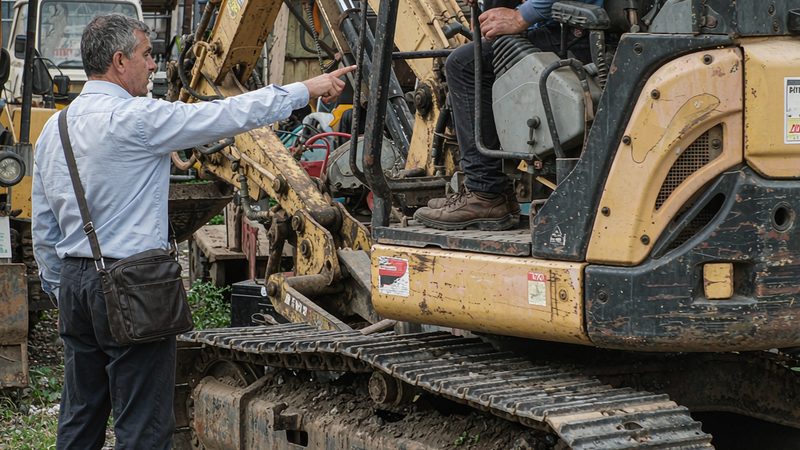
September 18th, Panyu yard. Seven in the morning, six flatbeds backed up at the gate, drivers leaning on their horns, and Old Liang the gateman shouting from inside: no room, really no room.
That day the yard held 112 machines: 43 excavators, 26 wheel loaders, 11 road rollers, and the rest — forklifts, pump trucks, aerial platforms — crammed along the aisles. Designed capacity is 90. We were more than twenty over.
After the pandemic ended in May, orders came back faster than I expected. June through August, 210 machines shipped in three months — 40% more than all of last year. Cargo moved out fast and came in faster. The yard hit its limit first.
This time last year the yard sat half empty and I worried every day about supply. This year it's the opposite: I worry about parking spots. That's business — one headache after another.
Tight parking also carries a hidden cost. In August, two wheel loaders a customer had already bought sat pinned in a corner for nine extra days because we couldn't move them out; the customer chased us four times. To pull one machine out of a corner you first move five or six in front of it, and two drivers lose a morning.
The worst day was August 27th. Thirteen machines came in, five left. Incoming flatbeds couldn't enter, outgoing ones couldn't leave, and the intersection jammed for over half an hour until the logistics company next door came banging on our door. I made the call on the spot: the yard has to expand.
The Lot Next Door Sat Empty for a Year and a Half
Next to our yard is a 12-mu logistics plot. The previous tenant ran an e-commerce warehouse, moved out in March 2022, and it's been empty since. Weeds knee-high — I climbed the wall twice to look. Twenty-plus meters of perimeter wall had collapsed, and the ground was littered with broken bricks and rotten pallets.
At the end of August I went to negotiate. The landlord, surnamed Mai, opened at RMB 28,000 per mu per year. I said I'd be paving the ground myself, repairing the wall, running water and power — all money. Four rounds of talks ground it down to 22,000, three months' deposit plus one month paid: first payment RMB 792,000.
Signing day I read the contract three times. Negotiated a 45-day rent-free period for the refit. The contract states the paved ground stays with the landlord at the end of the term. He insisted on that clause; I accepted — tearing it out would be worthless anyway.
With our original 28 mu, that's 40 mu total. For a used equipment operation in Panyu, Guangzhou, renting 40 mu puts us top three among peers.
What the Refit Cost
I kept the list. Breaking up and hauling off the old surface, 16,000 square meters: RMB 110,000. Crushed-stone base plus 18 cm of concrete paving: RMB 460,000. Three hundred eighty meters of drainage ditch: RMB 36,000. Repairing 220 meters of perimeter wall: RMB 58,000. Water, power, lighting, cameras: RMB 94,000.
Total RMB 760,000, RMB 110,000 over budget. The overrun was concrete. Cement prices rose in August, RMB 60 more per truckload — over 380 truckloads, that's RMB 22,000. Add rain delays: twelve days lost, plus idle-labor costs on top.
I was on site every day of the pour. Mixer trucks rolled in at dawn and crews knocked off at 8 p.m., two shifts. On the twelfth night a sudden downpour nearly ruined 200 fresh square meters; we were up past midnight laying tarpaulins.
This overrun was my miscalculation — the budget used June cement prices. I own that. Going forward, all big-ticket budgets use current-month quotes for key materials. That rule is now written into our purchasing process.
How the New Yard Runs
It went live October 1st. I zoned it: incoming machines to the pre-inspection area, sold machines to the inspected area, container loading near the gate, with a 9-meter main lane so flatbeds turn around without three-point reverses.
At the old yard's worst, finding one machine took forty minutes — digging through logs, making calls, running the lot. Now every machine enters the system with a slot number; finding one takes five minutes. With the loading area near the gate, we load four more containers a day.
The new lot sits 40 cm higher than the old one, and I personally watched the drainage ditches being dug. A heavy storm hit at the end of October: five centimeters of standing water in the old yard, bone dry in the new one. The twelve days of rain delays paid themselves back.
Opening day I bought dinner for the construction crew and our yard hands, eight people, RMB 640. The electrician said these were the brightest lights he'd ever installed in a yard — no more loading containers by flashlight at night.
Is the Rent Expensive
Yes. RMB 264,000 more rent a year, plus amortizing the refit — over RMB 50,000 more per month going out.
But in late September we took on 27 machines under consignment storage at RMB 300 per machine per month. Peers have stock and nowhere to put it; we have the space. That line alone earns back half the new lot's rent in a year.
The other half comes from turnover. With breathing room, we dared to buy at volume: 106 machines purchased in October alone, double August's. When machines have somewhere to sit, the business has room to grow.
If you're thinking of renting a similar lot, one warning: confirm the land use zoning first — whether construction machines can park there, whether night work is allowed. I looked at a cheaper lot once, RMB 16,000 per mu, and only after long talks found a night-noise ban in the contract. All our container loading happens at night; that lot was unusable.
If you're also expanding, remember one line: run the yield per square meter before you sign. My formula is posted on the office wall: one mu must generate RMB 400 a month in net profit, or we don't expand.