
Three Years of the Pandemic: What It Left This Industry
The pandemic is nearly over, but three things stayed: online video inspection, cautious payment terms, and a more scattered customer base. Online inspections still make up 30% of our orders this year, and I don't see that share dropping.
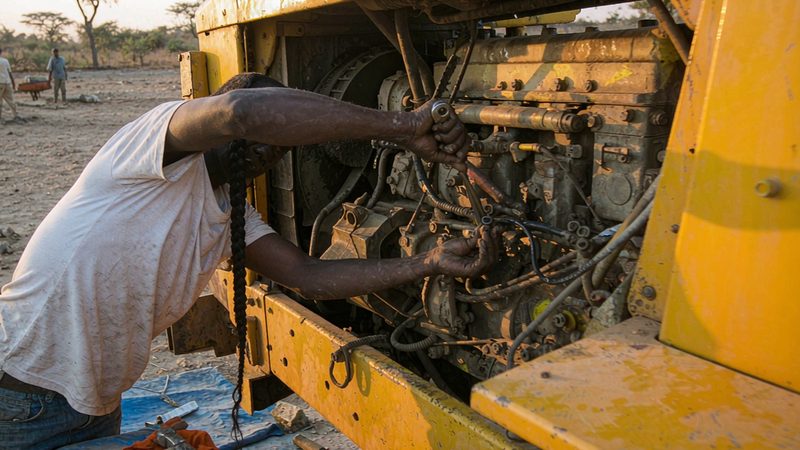
March 15th, Nansha inspection yard. In the morning I finished inspecting two wheel loaders while the customer watched from the other end of a video call. Afterward I did the math: in the first two and a half months of this year, online inspections accounted for 30% of our orders.
Borders are open, quarantine is gone, and customers have been flying in since February. But some things stayed. This piece is about what three years of the pandemic left this industry.
Online Inspection Stayed
In April 2020 we did our first inspection in front of a phone camera — shaky hands, laggy signal, and the customer hung up after twenty minutes. Back then it felt like a stopgap, nothing more.
Three years on, the process is finely tuned. A fixed camera for wide shots, a handheld for details: engine number, hour meter, mast clearance — seventeen mandatory shots, none skipped. After the video inspection, the report goes out within 24 hours.
Lao Li wasn't used to it at first; he couldn't get a word out facing the phone. Then he made himself a rule: talk wherever you're inspecting, no "start," no "stop." Now he records a full pass in one take, smoother than the young guys.
Now that customers can travel, we haven't dropped online inspection. Simple reason: an African customer's trip to Guangzhou costs RMB 20,000 in flights and hotels, and not everyone can afford that. Thirty percent of orders are still inspected online, and I don't think that share is going down.
Payments Got More Cautious
Before the pandemic, 20% down from old customers was the norm, and with the familiar ones a single sentence could ship the goods. Not anymore.
Our rule is now 30% minimum, 40% for new customers. Customers are just as cautious: more of them pay the balance only after seeing the bill of lading copy, and they want inspection reports in finer and finer detail.
This isn't relationships going bad — everyone got schooled by these three years. Sailings vanished without warning, ports shut without warning, and whoever held the most cash survived. Caution is this industry's scar tissue, and its memory.
At the craziest point of 2021 freight rates, a container to West Africa was quoted at USD 4,200. One customer's cargo had already reached port when the rate climbed so high he abandoned the container. See that once and everyone learns.
The Customer Mix Changed
Before the pandemic, 60% of our orders came from a dozen old customers. Now old customers are down to 45%, with orders spread across more than forty customers.
The change came from both ends. On one end, local African used-equipment dealers emerged — they inspect and price machines themselves and buy direct from China, small orders but many of them. On the other end, some old customers' businesses shrank over these three years, and their volumes never got back to 2019.
Less dependence on any single big customer is a good thing. In 2021 our largest customer was 22% of our exports. Last year that number was 13%.
Domestic Purchase Prices Aren't Going Back
Over the three years, the pace of domestic infrastructure shifted, the population of excavators and wheel loaders grew, and supply increased. In 2019 a three-year-old CAT 320D cost RMB 520,000. Now a good one goes for just over 400,000.
Lower purchase prices mean lower export quotes. What we earn now isn't the spread — it's the craft of inspection and turnover. That change, I believe, is permanent.
What Stays, What Goes Back
My take: online inspection stays, cautious payment stays, a scattered customer base stays. Freight went back, trade shows went back, business trips went back.
The temperature-check table at the warehouse gate was retired in February and moved into the storage room. There's half a case of disinfectant left; we keep it to wipe down machines.
These three years weren't endured for nothing. What stayed was craft bought with real money. If you want a machine inspected, online or in person both work — ask me for the seventeen-point checklist.