
Year-End Review: What We Got Right and Wrong This Year
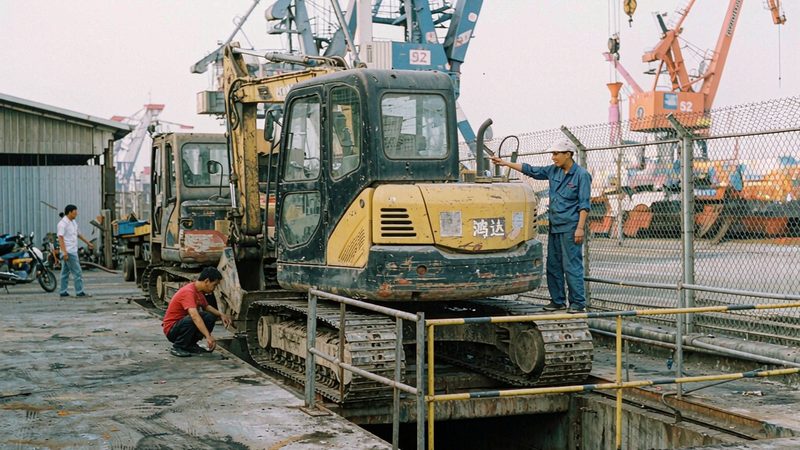
In 2021 revenue came back to ninety-two percent of 2019. Consolidation and early space booking were right; stockpiling inventory and expanding categories were wrong, and the bulldozers we hoarded lost 410,000 yuan. For 2022, only three adjustments.
On December 29, Finance reported the full-year numbers to me: revenue at ninety-two percent of 2019, profit fourteen percent below 2019. In the second year of the pandemic, getting back to this level was not easy.
On the last working day of every year, my habit is to write my own review; no slides for the staff, just writing it down. This year's, excerpted here for the website. Right and wrong both included, the wrong parts in more detail.
Right Move One: Consolidation
Freight tripled this year, scaring off quite a few customers. In March we pushed consolidation: two or three small machines in one container, or machines paired with solar PV mounting structures, spreading freight costs by thirty to forty percent.
Over the year we ran ninety-seven consolidated shipments, fifty-five percent of all shipments. The cost of consolidation is waiting, an average of nine extra days to fill a container. Ninety percent of customers were willing to wait: nine days for a third off the freight; anyone can do that math. Some would not wait; one Kenyan customer insisted on paying US$2,000 extra for a dedicated direct container because his site was waiting. Everyone has their own ledger; we lay out both routes and let the customer choose.
Consolidation brought in 9.4 million yuan of revenue. Without it, most of those deals would not have closed.
Consolidation also crashed once. In May, two customers' cargo shared one container, and at destination a case of parts came up missing; both customers said it was not theirs. It took three days to find: a label had been stuck on wrong during loading. Since then, for consolidated loads, our people are present the whole time, one photo per item.
Right Move Two: Booking Space Early
The pre-Chinese New Year shipment that we guarded at the port for eleven days cost us 23,000 yuan in tuition. After that the rule changed: book space the day the contract is signed, lock it down, then prepare the cargo.
Shipments delayed by space problems fell from fourteen last year to three. We paid deadfreight seven times for nothing, US$11,000 total, but it was worth it; it is far cheaper than penalties. Booking is now written into the contract workflow: the moment sales signs, logistics starts moving, no longer waiting for the cargo to be ready.
Wrong Move One: Stockpiling Inventory
In May I read the market wrong. Domestic purchase prices were high, and fearing they would climb further in the second half, I gritted my teeth and stockpiled fourteen bulldozers at an average of 380,000 yuan, planning to sell them at a markup by year-end.
Demand for bulldozers never came. This year African customers wanted excavators and wheel loaders; mines were running hard, earthwork was plentiful, and nobody asked about dozers. By year-end only five of the fourteen had moved. Nine are still sitting there, costing 68,000 yuan a month in capital and yard fees.
When I was buying that batch, Lao Li talked at me: dozer orders had been thin for two years, do not get greedy. I did not listen; I thought a low price was its own logic. A low price is not logic. Demand is logic.
This month I took the loss: all nine machines repriced down, average let go at 334,000 yuan. All told, that batch lost 410,000 yuan. Where was the mistake? Betting the market on my own judgment. I am good at inspecting machines. Fortune-telling, no.
There were hidden costs too. Machines sitting idle, batteries draining, tires aging, need someone to start and move them every month. Finance never broke that out; I estimate another twenty or thirty thousand. Inventory costs money even standing still.
Wrong Move Two: Expanding Categories
In August I gave the word to add aerial work platforms and bought six scissor lifts. The thinking: solar projects would need them, and we could sell them alongside the modules.
We sold one in half a year. The problem was after-sales. We had no spare parts for the lifts' electronic controls, and our inspectors had no experience with them; Lao Li can inspect mechanical structures, but circuit boards are beyond him. The one we sold: in November its controller failed, we air-freighted parts from Changzhou at US$2,600, and the customer was down for nine days.
A category is not just adding a model; it is a whole chain of inspection, parts, and after-sales. Sell before the chain exists and you are digging a pit. Six machines, losses plus tied-up capital: no less than 150,000 yuan. That tuition plus the dozer tuition: 560,000 yuan, enough to pay the whole company double salary for a year.
Three Adjustments for 2022
One, hard inventory cap of forty machines; over the cap, no buying, and whoever buys owns the capital cost. That rule starts with me.
Two, aerial work platforms are suspended; until the parts system and inspection process exist, not one more unit gets sold. For the one already sold, we keep two sets of spares in stock; if it breaks again, parts ship within 48 hours.
Three, the consolidation lanes are fixed: two consolidated containers a week on the East Africa lane, customers plan by the week instead of waiting for ad-hoc fills.
Someone asked me what revenue target I have for next year. I did not set a number. The biggest lesson this year: do not build plans on the market; the market does not consult you. Do the things in your hands well, booking, consolidation, inspection, and when the market is good you earn more; when it is bad, you lose less.
This year all forty-seven employees got their year-end bonus at the 2019 standard. At the bonus meeting I gave no speech, just one line: keep going next year. The 410,000 I lost comes out of my own dividend, not the company's. I broke the rule; I pay the money. I understood this principle the year we did not lay anyone off; this year it landed on my own head, and I cannot pretend not to understand it.