
For That Chinese New Year Shipment, We Camped at the Port for Eleven Days
Before Chinese New Year 2021, five machines waited eleven days at Nansha port for vessel space, at 1,300 yuan a day in storage. The last one was loaded at three in the morning. That shipment taught me to book space a month ahead.
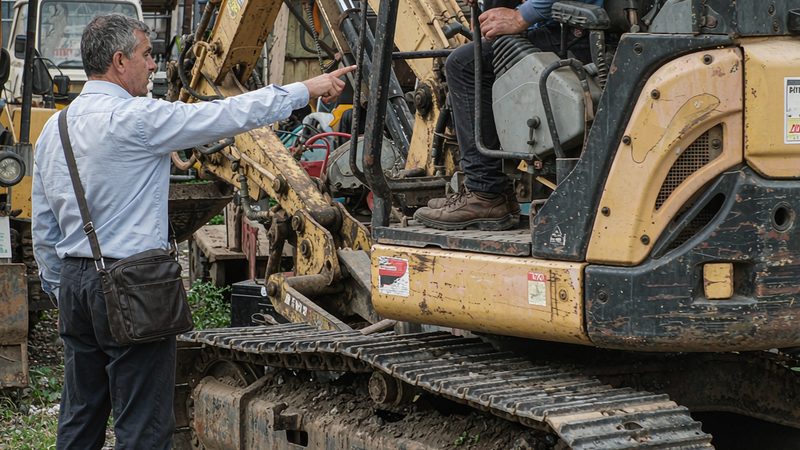
February 7, the twenty-sixth day of the twelfth lunar month: the last road roller was loaded aboard at Nansha. The cold wind off the terminal cut down my neck as I watched the crane set it into its slot. I pulled out my phone and messaged Peter in Kenya: your machine is aboard.
Counting from January 27, when the first machine entered the port, we kept watch at the terminal for eleven days over those five machines.
Peak Shipping Season Met Zero Space
This pre-holiday season was different from past years. Normally cargo owners ship out in early twelfth month and the port empties by mid-month. This year it flipped: overseas customers, fearing post-holiday price rises, pushed all their orders into January. In the first half of January we took eleven shipments, sixty percent more than the same period last year.
But the number of ships had not grown. Empty containers were not coming back, and the carriers cut space at Nansha by thirty percent. When I tried to book on January 20, the forwarder replied: no space before month's end, scheduled after February 5, not guaranteed.
The five machines had already cleared export inspection and sat in the yard waiting to gate in. Watchman and insurance fees ran 180 yuan per machine per day. The bigger pressure was the contract: Peter's shipment had to be loaded by February 10, with a penalty of two thousandths per day late.
The forwarder advised me to pull the cargo back and ship after the holiday. I said no. Peter's site starts work in March and is waiting on his roller to pave the road. Shipping after the holiday would kill his schedule.
On January 15 I made a trip to Nansha. The container stacks were visibly higher than the month before, and the queue of trucks at the gate stretched out of sight. The forwarder told me space prices were changing daily; a quote made in the morning was void by afternoon. My heart sank.
Eleven Days Waiting for Space Inside the Port
On January 27 I made a call: do not wait for confirmed space before gating in; push the machines into the terminal yard first. You have to be inside the port to queue, and only in the queue can you grab a cancellation. Storage is expensive, but breach of contract costs more.
The five machines entered in three batches, at 1,300 yuan a day in storage. The gate-in procedures were heavier than in past years: drivers needed a nucleic acid test within 48 hours, the machines had to be disinfected, another 1,500 yuan for the five.
Xiao Wang and I took shifts; he held the days, I held the nights. What were we watching? The forwarder's calls, the carrier's space-release notices. When space opened up, you had two hours to confirm, or it went to someone else.
For those eleven days my phone never left my hand; I took it into the shower. At two in the morning on January 31, the forwarder called: a vessel had added an ad-hoc Nansha call, one 40-foot flat rack slot released, thirty minutes to decide. Wrapped in my coat at the edge of the terminal, I read off the machine number and packing details. Only after hanging up did I notice my hands were shaking.
Xiao Wang's days were not easy either. The boxed meals by the terminal went from 15 yuan to 25, eaten in the car because you could not take your mask off in the operating area. On the twenty-ninth he told me, bro, this is the least New-Year-feeling New Year I have ever had. His home is in Foshan, forty minutes by car, and he never made it back.
Five Machines, Five Ways Out
Each of the five machines got out a different way.
Two were snatched from cancellations; someone else's container got rolled and we took the slot. One was bought with money: US$1,400 in expediting fees, not budgeted in the contract price; the company ate it. One went by barge to Hong Kong for transshipment, six days longer than direct. I leveled with the customer, and he said as long as it arrives, fine.
Even the two cancellation slots were not free luck. The forwarder releasing space only gives it to whoever has complete documents. Our packing list and customs declaration were ready in the car; ten minutes after the call, everything was sent over. The equipment dealer next to us lost the slot because their paperwork was not ready.
The last roller had the hardest path. Its vessel arrived February 5; we got space confirmation on the 3rd, declared customs on the 4th; the young woman at the customs broker was still amending our entry on New Year's Eve. The ship came in on the 5th, but the crane slot was scheduled for the small hours of the 6th. When loading finished I checked my watch: 3 a.m., February 6, seven hours before the customs cutoff.
Eleven days: 14,300 yuan in storage, US$1,400 in expediting fees, 800 yuan extra for the barge transshipment; over 23,000 yuan total. Nearly half the gross profit on that shipment, gone.
What I Learned
On the afternoon of February 7 I sat at the edge of the terminal and ran the numbers: most of those eleven days could have been avoided. The mistake was booking too late. In past years ten days ahead was enough; this year you needed a month. I ran a new market with old experience. Tuition: 23,000 yuan.
The company rule is changed now: the day a contract is signed, book the space that day; do not ask when the cargo will be ready. With space in hand, it does not matter if the cargo gates in a little late; worst case you pay a few days of storage. The reverse, cargo ready but no space, is burning money every single day. This rule is written into the contract workflow: the moment sales signs, logistics is notified.
Peter got word of the arrival on February 21; the ship was nine days late against plan. He replied with a voice message, the roller's engine audible in the background: paving had already begun. I proactively calculated nine days of penalty and offered it to him. He refused it; he said he knew we had stood watch at the terminal for eleven days.
Customers shipping after the holiday: give us your plan six weeks ahead. I will watch the space for you, but do not make us camp at the port for eleven days again. Xiao Wang never made it home on the twenty-ninth. The company owes him one, and it is on the books.