
The Excavator We Sold Ten Years Ago Is Still Running
We revisited the first batch of machines we sold in 2015. Of the three units, one was scrapped, one was overhauled, and one is still at work.
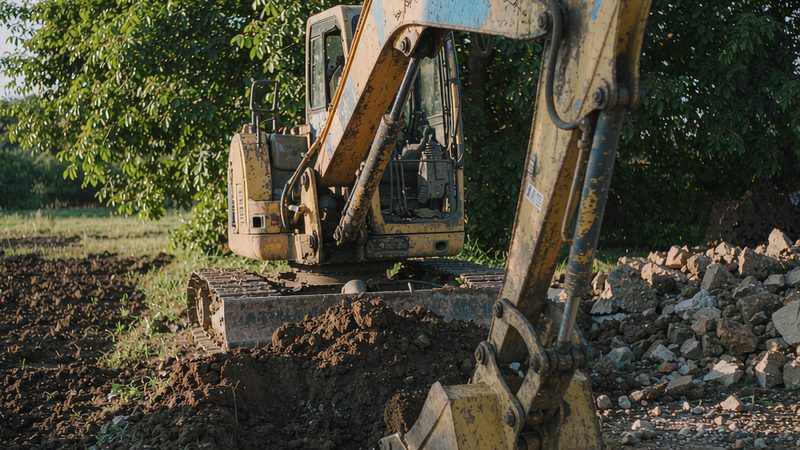
In 2015 we sold our first batch of machines — three of them — to Tanzania.
Ten years on. This November we went back to see those three machines.
The result: one scrapped, one overhauled, one still working.
Number one: scrapped
Last four digits of the VIN: 3187. Twenty-ton class, built in 2008.
When we sold it, the hour meter read 11,200.
This machine was written off in 2021.
The cause wasn't age — it was an accident.
The customer told us: in 2021 the machine was working a mine site when a slope gave way. The machine rolled; the boom snapped; the cab was crushed.
The operator was fine. He jumped clear.
The machine was totaled.
It ran six years, from 11,200 hours to over 34,000.
23,000 hours in six years — 3,800 a year. That's not light duty.
The customer said it would still be running if not for the accident.
I said, what matters is the man is fine.
Number two: overhauled twice
VIN 4205, also twenty-ton class, built in 2009.
Sold at 9,800 hours.
Still running today; the meter reads 31,700.
Overhauled twice.
The first time was 2019: the main hydraulic pump failed. A new pump, fitted locally with parts and labor, cost over 70,000 RMB.
The second was 2023: an engine overhaul — pistons, rings, liners, pins — costing over 40,000.
Two overhauls, 110,000-plus together.
The customer paid 390,000 for the machine; with repairs over ten years, just over 500,000 all in.
He's done the math on what the machine earned him over ten years. He didn't give me the number — just said it's far beyond that.
I asked him: do you regret buying used?
He said no. A new machine is 1.2 million. I couldn't have afforded that.
Number three: still working
VIN 5091, built in 2010, sold at 8,400 hours.
Now at 28,900 hours.
Still working.
This machine had the gentlest duty of the three — municipal work, not mining.
Different duty, very different lifespan.
In ten years it has needed only routine wear parts: bucket teeth, hoses, filters, seals. The engine has never been opened. Neither has the hydraulic pump.
The customer plans to run it three more years.
I said, keep up the maintenance and there's no problem.
We pulled the files on all three
The photos we took ten years ago are still there.
Machine one: 180 photos. Machine two: 203. Machine three: 196.
Shot on a Canon 60D, eighteen megapixels.
By today's standards the image quality is ordinary — but the record is complete.
We compared the ten-year-old photos with today's.
On machine three's cab, the seat was intact ten years ago; now the rubber where the right foot rests has worn through.
The boom's paint had light scratches ten years ago; those scratches are still in the same spots — just more of them now.
Comparisons like that move me.
How much we've changed in ten years
I compared our 2015 inspection reports with today's.
In 2015 we shot 180 photos per machine; now it's no fewer than 180, often over 200. The count hasn't changed much.
The content has.
In 2015 we didn't read the ECU. Now we do.
In 2015 we didn't check hydraulic pump serial numbers. Now we do.
In 2015 we had no parts inventory. Now we hold 1.4 million yuan in parts.
In 2015 we built no service histories. Now 68 percent of our machines have them.
In 2015 our inspection report was six pages. Now it's fourteen.
What hasn't changed
One thing hasn't: we photograph what doesn't look good.
Ten years ago we photographed weld repairs, oil seepage, and wear. We still do.
I think that's the hardest discipline to keep, because every one of those photos costs us deals.
Someone once suggested I shoot all the detail photos but deliver the problems verbally — don't put them in the report.
I didn't take the advice.
What's written in the report is a promise.
What the customer said on the revisit
The third customer — the one doing municipal work — said one sentence.
He said, ten years ago you told me everything wrong with this machine. Looking back now, you were right.
I said, you've verified it.
He said, verified.
This year is year ten
This year the company turns ten.
In ten years we've sold over 1,400 machines.
We've revisited fewer than a hundred.
That revisit rate is low — it's our shortcoming.
Next year we plan a revisit program: every machine sold from 2016 to 2018 that we can still reach, we'll go see.
Not for marketing — to learn how long our machines actually last.
That data is useful to us, and even more useful to customers.
To close
Three machines: one scrapped, one overhauled, one still running.
I don't know if that's a good ratio or a bad one.
Ten years, three machines, holding up like this — I think it's decent.
The first was an accident — not on us. Two overhauls in ten years on the second is normal for equipment. The third is in good shape because the duty was gentle and the maintenance was good.
What we can't do is maintain the machine for the customer. What we can do is judge the machine right and tell the truth.
Ten years on, that hasn't changed.