
The Year Container Rates Went Insane — How We Got Through It
One container went from two thousand dollars to fifteen thousand. That year we changed how we quote, changed how we load — and lost a few customers.
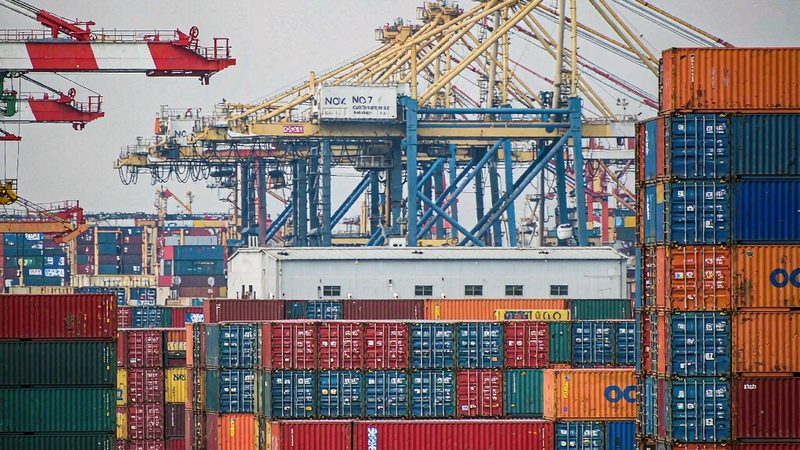
From the second half of 2020 into 2021, ocean freight went insane.
I have the complete quoting records. Reading them line by line feels like watching an accident.
How much it rose
Guangzhou to Lagos, forty-foot high cube.
May 2020: $2,100.
September 2020: $4,800.
December 2020: $8,200.
February 2021: $11,000.
April 2021: $15,300.
Seven-fold in a year.
Equipment cargo was worse, because overweight, oversized boxes carry surcharges. We had one flat-rack shipment where freight plus surcharges came to $21,000.
The equipment in that shipment was only worth three hundred-odd thousand RMB.
Why it rose
The reasons are tangled. Here are the three I saw.
One, not enough boxes. The pandemic jammed ports and empties couldn't get back. We export more than we import — boxes go out, few come back.
Two, not enough slots. Carriers cut sailings; capacity fell while cargo volumes didn't.
Three, the demand structure shifted. During the pandemic, manufacturing in many countries stalled and consumer demand moved to China. General cargo crowded out the slots, and equipment shippers like us had an even harder time booking.
Our first reaction was wrong
In September 2020, when freight hit $4,800, we judged it a short-term spike that would fall back.
So we made a decision: absorb the increase ourselves and hold prices on signed contracts.
The reason was preserving customer relationships.
That decision cost us 370,000 yuan in the fourth quarter of 2020.
By December, freight was $8,200. We couldn't hold.
What we changed
Starting in December, we changed three things.
One: freight listed separately
On the quote, goods and freight are itemized. The freight line states: settled at the actual rate on the day of booking, per the carrier's rate sheet.
Customers didn't accept it at first.
Our explanation: freight is beyond our control. We earn our margin on the goods, not on freight spreads. If we lock freight in, either we lose money, or we pad the goods price to hide it.
Which do you prefer?
Most customers chose itemized.
Two: longer booking lead time
We used to book space ten days out. We stretched it to twenty-five days.
Booking early has two benefits: a relatively lower rate, and time to find alternatives if you can't get space.
The cost: customers must confirm orders earlier. Some can't, and those orders were lost.
Three: new loading methods
This one was forced on us.
Freight is charged per box, not per ton. So you pack more into each box.
Before, one twenty-ton excavator went into one forty-foot box and the leftover space was wasted.
We started consolidating. One excavator plus two small machines, or one excavator plus a batch of parts, in a single container.
It's hard work — weight distribution, lashing, load-and-unload sequence. We revised our lashing plan four times.
After the change, average cargo value per container rose from 220,000 to 310,000 yuan.
Freight cost per unit of cargo fell 29 percent.
The customers we lost
We lost four customers that year.
Two canceled their purchases because the projects no longer penciled out after freight rose.
One couldn't accept the itemized freight term and went elsewhere. He came back once later — said the other company bundled freight, but he had no idea how much was padded into the goods price.
One more left because we couldn't get space and his shipment slipped forty-three days. He said nothing. He just never called again.
For that fourth customer, I can't blame freight. Failing to book space was our own shortcoming.
What we learned
One, never bundle uncontrollable costs into a fixed quote.
That sentence now sits on page one of our quote template. Freight, exchange rate, duties — all itemized.
Two, capacity is a resource; lock it in advance.
In the second half of 2021 we began signing annual space agreements. Slightly more expensive, but the space is guaranteed.
Three, load factor is competitiveness.
Same shipment — whoever spreads the freight thinner can quote lower. We now run a dedicated stowage plan for every single shipment.
Four, customers want certainty, not the lowest price.
When freight is rising, what hurts the customer most isn't the price — it's not knowing next month's number.
What we can do is give a clear number and a clear rule, even if the number is high.
Today
It's 2026. Freight fell back long ago. Guangzhou to Lagos is around $3,200 now.
But the three changes from that year stayed.
Itemized freight, early booking, consolidated loading. They save money at low rates too — they weren't just for the emergency.
Sometimes I think: without that year, we might still be working the old way.
That year hurt. But it forced us to change.