
My First Trip to Africa: 30,000 Yuan in Cash and a Box of Parts
In 2015 I went to Tanzania for the first time, carrying 30,000 yuan in cash and a forty-kilogram box of parts in checked luggage. I lost money on that trip — but learned how this business works.
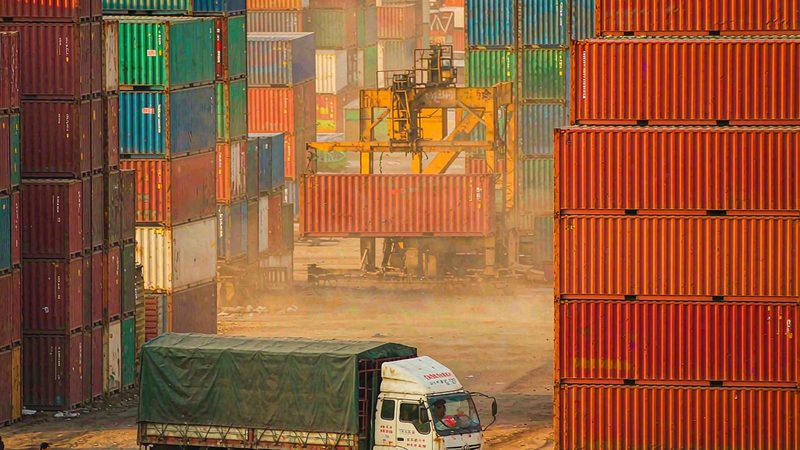
March 2015, my first trip to Africa. Dar es Salaam.
The round-trip ticket cost 8,400 yuan. I checked a box of parts — forty kilograms, with a 1,200-yuan overweight fine — and carried 30,000 yuan in cash on me.
The company was two months old then: just me, Lao Li, and a young woman handling documentation.
Why cash
Because the company had no foreign-exchange account yet, and no letter-of-credit facility either.
The customer said they were used to cash deals.
I believed him. Thirty thousand yuan in a waist pouch; going through customs I kept wondering whether I'd be stopped.
I learned later how stupid this was. Robbed, lost, or confiscated — any of it would have been on me alone. It's something only a first-timer does.
Now I tell new colleagues heading out: no cash, use proper channels, even if it's three days slower.
That box of parts
Lao Li and I spent a whole night picking the forty kilograms of parts.
Twelve hydraulic hoses, two sets of oil seals, six filters, four bucket teeth, one starter motor, plus a pile of fittings and clamps.
Why bring parts? Because the customer said: I don't trust your machines unless you prove that what breaks can be fixed.
My thinking was simple: put the parts in front of him, and he'll believe.
That thinking looks stupid now too. Parts delivered — then what when they're used up? Check another forty kilograms next time?
But it did work: that trip landed my first order. Three machines.
How the customer inspected
The customer was called Mohammed; he later became a friend of more than ten years.
He brought two operators and spent a morning in the yard.
He never asked the price. He had the operator start the machine and listen, then drive it up to a pile of rocks and dig.
Ten minutes of digging later, the operator climbed down and said a few words in Swahili.
Mohammed asked me: what does the hour meter say on this machine.
I said: 11,200.
He said: the operator says it's more.
My heart skipped. Back then we had no ECU-reading procedure; I had only read the meter.
I said: we'll go back and check properly, then tell you. If it's higher, I'll lower the price.
How the 30,000 yuan went
For the three machines, the customer paid a thirty percent deposit — 58,000 yuan — by bank transfer.
The balance was settled after I got home.
The thirty thousand in my pocket went here:
Yard fees. The machines sat seven days in a yard in Dar es Salaam at 120 dollars a day — 840 dollars.
Meals with the customer, three of them, 320 dollars in all.
Taxis and sundries, two hundred-some dollars.
And the dearest line: I replaced two hydraulic hoses for the customer from the parts I had brought. Free — but those two hoses cost 480 yuan.
Flying home, I had six thousand-some yuan left of the thirty thousand.
The two sums I got wrong
First, freight. I quoted by standard container, but one of the three machines was oversized and needed a flat rack. A flat rack costs 2,300 dollars more than a standard box — money I forgot to count.
Second, customs. Clearance agency fees, inspection fees, and port surcharges in Tanzania added up to 1,100 dollars. I thought they were inside the forwarder's quote. They weren't.
Together: 3,400 dollars — over 21,000 yuan at the exchange rate then.
On those three machines we ended up earning 9,000 yuan.
Nine thousand on three machines — three thousand each.
But the trip still paid
Not in money.
First, I learned what container an oversized machine needs, and that you must measure before quoting. That rule went into our quotation template.
Second, I learned clearance costs must be confirmed line by line — never trust the words all included. In our quotes now, clearance-related costs get their own column, marked estimate, subject to actuals.
Third, I met people. Mohammed later referred nine customers to us. He takes no commission for referrals; he just says this man is solid.
Fourth, and most important: I found that what customers truly care about is not price.
Mohammed told me later that he bought from us because of the sentence we'll check and tell you.
He said, asked about hour meters, most people say don't worry, absolutely genuine. I was the only one who said he'd go back and check.
The machine with the wrong hours
Back home, we checked. The ECU read 13,400.
Two thousand two hundred hours more than the meter.
We told Mohammed and dropped the price by 15,000 yuan.
He said, you could have said you didn't know.
I said, you have operators. You'd have found out sooner or later.
For those just entering the trade
On that first trip, I made more mistakes than written above.
Carrying cash, missing the flat-rack fee, trusting the words all included, quoting with no margin for error.
Every one of those mistakes was paid for in cash.
If you're about to make your first trip, my advice:
Bring a quotation checklist you wrote yourself, and confirm item by item. Don't fear looking green.
Bring someone who knows machines. Had I brought Lao Li on that trip, I'd have lost ten thousand less.
Don't fear saying I don't know. Saying you don't know beats saying it wrong by a hundred times.
Eleven years on, the company has grown from three people to more than seventy. Thinking back on those thirty thousand yuan in cash still scares me.
But it bought the first order.