
The People Buying Used Excavators Have Changed
Five years ago customers asked me 'how much?' Now they ask 'what work has this machine done?' Buyers have changed, and how we survive has to change too.
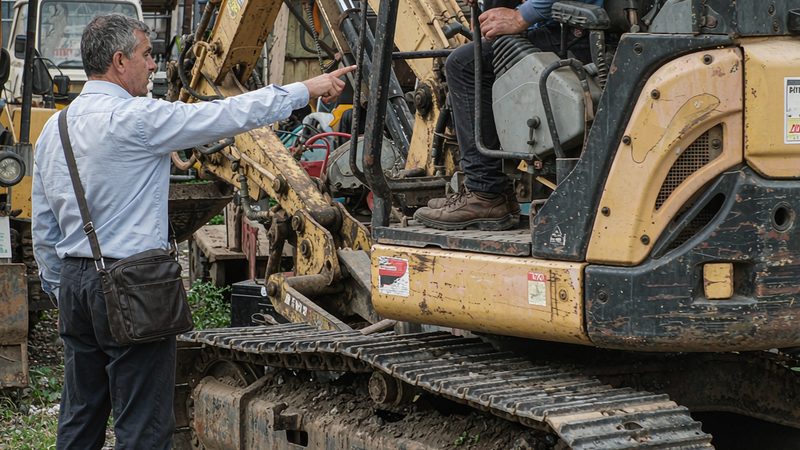
Eleven years in this trade. In the last three, the people coming to buy machines are visibly different.
I'm writing down the changes; peers can check them against their own experience.
The questions five years ago
In 2021, when a customer called, the first question was almost always: how much is this machine.
Second: can you go lower.
Third: when can you ship.
Three questions, then the order.
Back then, selling machines came down to price and lead time. Whoever was cheaper and faster closed the deal.
The questions now
These days, the first question is often: where did this machine work before.
Second: is the hour meter real, and how do I verify it.
Third: do you stock the wearing parts, and what happens if it breaks down over there.
Fourth: can I have the maintenance records.
Price is the fifth question, sometimes the sixth.
I counted this year's inquiry calls from January to September — 327 of them. Only 89 led with price: 27 percent.
In 2021 that share was 76 percent.
Why it changed
A few reasons, as I see them.
First, buyers got burned. The machines shipped out from 2021 to 2023 were many, and so were the problems. Plenty of customers had their purchase in the workshop within three months, one repair costing half a machine. Burned people learn fast.
Second, local markets matured. An African country used to have a handful of used-machine buyers; now there are many, and information travels. Get cheated in Tanzania, and Kenya knows within a week.
Third, customers' operators turned professional. Buyers used to know nothing and take the seller's word. Now many bring operators, and operators know machines.
Fourth, supply in China is abundant. Ask ten dealers in Guangzhou and ten have stock. If everyone has it, you pick the best, not the cheapest.
How we were forced to change
In 2022 we lost a major customer.
He had bought fourteen machines from us in one go, and in 2022 he wanted twenty more.
We quoted. He never replied. Later we learned he went to another dealer, one who gave him complete maintenance histories per machine and a parts-supply commitment.
Our price was lower. We didn't give him those things.
Twenty machines, gone.
After that, we did three things.
First: build histories
For every machine we take in, we build a record.
It covers: manufacture date, previous owner, main working conditions, maintenance records (if any), repair records (if any), and our own inspection report.
For machines with incomplete records, we write 'history incomplete' as-is. We don't invent.
Machines with histories now make up 68 percent of our stock. The target is 85 percent by year-end.
It will never reach a hundred — some machines genuinely can't be traced, and we don't fabricate.
Second: stock parts
In Guangzhou we stock the common wearing parts.
Covering mainstream models of Caterpillar, Komatsu, SANY, and XCMG.
Inventory value is now 1.4 million yuan.
A customer who buys a machine can get parts through us. We don't make real money on parts; markup stays within 15 percent.
Why do it? Because what customers fear most is not an expensive machine, but a broken machine nobody tends to.
1.4 million yuan sitting in a warehouse, turning twice a year. Not pretty math, but it brings customers.
Third: teach customers to inspect
We write our inspection methods into articles and publish them.
Someone asked me: once you teach customers, they'll inspect by themselves — how do you make money then?
I said, once they've learned, they know whose machines stand up to inspection.
The ones that stand up are ours.
Other ways customers changed
Payment terms. It used to be 30 percent deposit, 70 percent against the bill of lading. Now many ask for installments or letters of credit.
We take L/Cs — irrevocable sight L/Cs only, from banks on our approved list.
Lead time. Customers used to wait a month without chasing. Past twenty days now, they call.
Machine age. Any year used to sell; now the mainstream wants under five years old and under fifteen thousand hours. Machines over ten years have dropped hard in price.
Invoices. Many buyers used to skip them; now everyone wants them. Formal export, full documentation.
A new kind of customer
The last two years brought a new type: they don't buy, they rent.
Their projects run short — eight months, ten months — and buying doesn't pay.
We started renting this year; seventeen machines are out on rent.
Gross margin on rental is lower than on sales, but it's steady, and the money comes monthly.
We're still figuring this business out. I won't claim we're good at it.
To close
More professional customers are not bad news for us.
Peers living off information asymmetry will have hard years ahead. Those living off machine condition and service will do a bit better.
We chose the latter.
If you come to inspect, bring your operator. Bring a friend who knows machines. We're not afraid of you looking. We're afraid you won't.