
How Used Equipment Prices Moved in the Pandemic's First Year
In the first half of 2020, domestic used excavator purchase prices fell twenty percent, then climbed back in the second half. We bought nineteen machines while prices were down. Looking back, that call was half right.
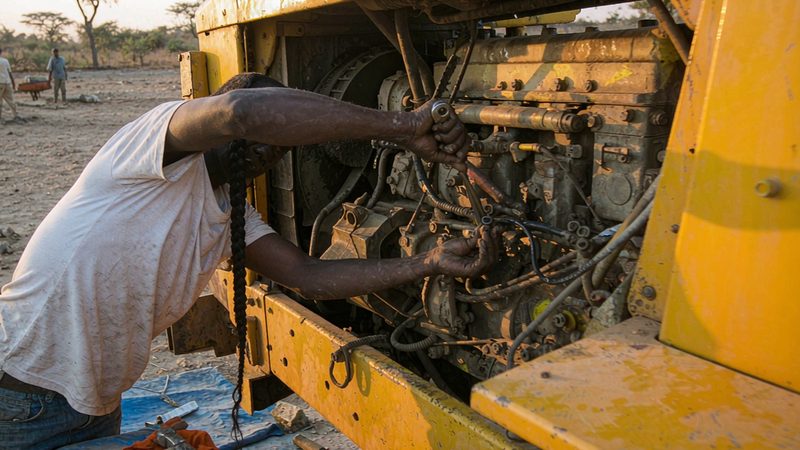
On May 19, I was taking inventory at the Panyu warehouse. Forty-three machines sat in the yard, nineteen of them bought between February and April this year. A fellow dealer asked me: in a market like this, you dare buy machines? I said yes, but I only dared buy half.
This piece lays out the price trend of the first five months of the year, for my peers in China and for our overseas customers. If you are planning to buy, read this and you will know when to move.
First Half: Purchase Prices Fell Twenty Percent
In February and March, construction sites across China stopped work, and machine owners' monthly loan payments dried up. In those two months I got more calls from owners wanting to sell than in the previous six months combined. The most desperate call came on March 12: the owner was crying on the phone. His excavator's monthly payment was 23,000 yuan, his site had been idle for two months, and the bank was calling him three times a day.
A 2016 CAT 320D: last October the owner was asking 520,000 yuan. In March he dropped it himself to 430,000, throwing in a spare bucket. The day I went to see the machine, the owner stood beside it smoking and said, brother, knock off another twenty thousand and it is yours. I did not haggle. It was a good machine, and 430,000 was already a steal; pushing further would not be business, it would be kicking a man when he is down.
Wheel loaders fell even harder. A three-year-old SDLG 50 was 145,000 yuan before Chinese New Year; in April you could get one for 110,000. Rollers and bulldozers were about the same, down fifteen to twenty percent across the board.
The reason for the drop is simple: sites stopped, machines stopped generating cash flow, owners could not carry the loans, so they had to sell. More sellers means prices fall. In late April I counted: just among the sellers we had talked to, more than 160 excavators were waiting to move.
On the Export Side: Volume Dropped by More Than Half
Cheap at home does not mean you can ship it out. From February to April, our export volume was only forty percent of the same period last year. It was not a lack of orders; we could not get the cargo out.
Shipping lines cut routes. Nansha to East Africa used to be three sailings a week; in February it became one a week, with skipped port calls on top. Space had to be booked two weeks ahead, and even then your container could get rolled. Freight rates climbed too: a 40-foot container to Mombasa was US$1,800 last year; by April the quote was US$2,600.
The overseas side was a mess too. Tanzania and Kenya started restricting gatherings in March, and site utilization fell. Customers did not stop wanting machines; they did not dare take delivery, because there would be no one to work them. At the end of March, Chidi in Nigeria flat-out postponed delivery of two rollers, saying the sites were shut and the machines would have to wait.
The numbers make it clearer. In Q1 the whole company moved 31 machines; Q1 last year was 74. February was the worst: four machines all month, two of which had been prepped before the holiday. The annual plan fell behind in the very first quarter.
Our Inventory Strategy: Buy Half, Hold Half
At the February annual meeting, Zhou Li and I argued all afternoon. He wanted to go all in while prices were low; a price like this comes once in a decade. I wanted to buy half. In the end we did it my way, for two reasons.
One, cash is king. Nobody knew when the pandemic would end. Holding forty-some machines in the yard costs 270,000 yuan a month in capital costs and yard fees. If the market got worse, the first to die would not be the dealer with no machines to sell; it would be the one with no cash.
Two, in a falling market it is easy to buy machines and hard to sell them. You buy cheap, but if your customers cannot take delivery, the machines sit in your hands and cheap turns expensive. Machines are not cabbages; at 300,000 yuan apiece, holding ten of them is three million yuan.
We were picky about the nineteen machines: only ones whose three major components had never been opened, under 8,000 hours, with complete paperwork. No matter how cheap, we did not touch anything in poor condition. That call proved right: when domestic sites restarted in May, purchase prices bounced back eight percent in a month; good machines rose first, and nobody asked about the junk.
The owner who had cried on the phone: we bought his machine at 430,000 and resold it in May to a site in Foshan for 490,000. When he found out, he called and said he should have held on two more months. I told him he could not have; monthly payments do not wait for anyone.
Some people advised me to dump the whole inventory to survive. I did not. Clear out the machines, and when customers come you have nothing; that is death too. Keeping half the inventory was keeping one breath in reserve. Business is like driving: you do not run the tank dry and then start looking for a gas station.
How We See the Second Half
By May, domestic excavator operating hours had returned to last year's level. My judgment: domestic purchase prices will keep rising in the second half and reach pre-drop levels by year-end, with good machines exceeding last October. On the export side, watch overseas site utilization; once the East African rainy season ends, there will be a wave of restocking.
One honest word for overseas customers: if you are buying, do it in June or July. The nineteen machines in our yard were all bought at the February-March lows, and that cheapness is still in our quotes. Once your sites fully reopen and domestic purchase prices climb back, this will not be the price anymore.
You can take this article to other suppliers and see who else dares to lay out the price trend this plainly. We dare to write it because our own real money is riding on it: nineteen machines, and not one of them came free.